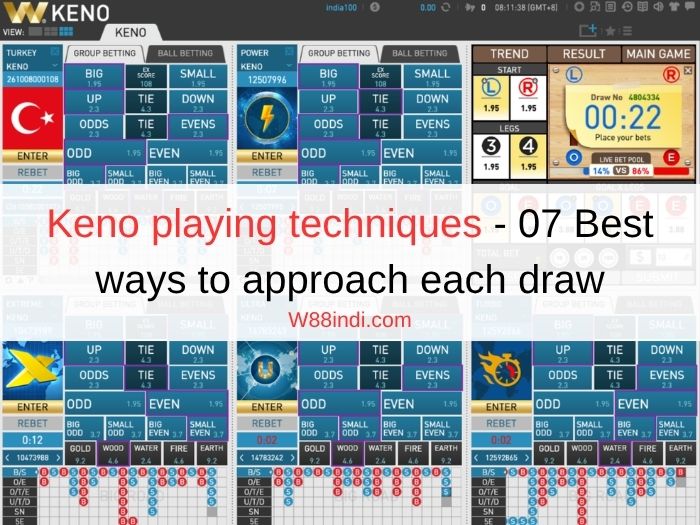
Learn 07 practical Keno playing techniques, from picking spots and reading paytables to demo practice and budgeting, so every draw feels focused and controlled.
Keno looks like one of the easiest casino games to pick up: you choose a few numbers and see how many land in a draw of 20 from 80. Rounds finish so quickly that it’s tempting to keep playing without thinking much about spots, bets, or limits.
Keno looks like one of the easiest casino games to pick up
Every draw is random, so no method can predict the next result. A sensible approach can help you make clearer choices about how you play. This guide covers practical Keno playing techniques to keep your decisions informed and your spending under control.
07 Keno playing techniques for smarter game decisions
None of these Keno playing techniques can change a draw’s outcome. Think of them as practical tips and tricks that make each session more deliberate, from choosing your spots to knowing when to stop.
Keno playing techniques for smarter game decisions
#1. Choose the right number of spots
Your spot count sets the pace of the game. Since 20, if the 80 numbers are drawn, you will match about a quarter of your picks on average. Fewer spots mean smaller prizes that land more often, while more spots mean bigger prizes that are much harder to hit.
Choose the right number of spots
The odds show how quickly this changes. Hitting all your numbers is about 1 in 17 with 2 spots, 1 in 326 with 4, and 1 in 1,550 with 5. With 10 spots, it’s roughly 1 in 8.9 million. Many beginners start with around 4 to 6 spots, which give a fair balance between hit frequency and payout size.
#2. Compare the Keno paytable before playing
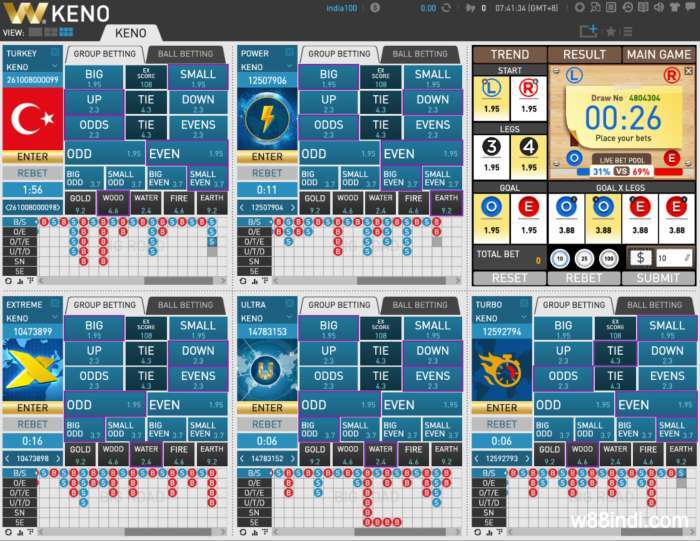
The paytable shows what each number of matches pays for the spots you pick, and it isn’t the same everywhere. Two Keno games can offer the same spot count with very different payouts, so it’s worth checking before your first round.
Compare the Keno paytable before playing
Don’t judge a game by the top prize alone, which is one of the simplest Keno techniques to put into practice. Look at what it pays for smaller catches too, since those are the hits you’ll see most often. Check the minimum and maximum bet limits listed beside the paytable as well, so you know the game fits your budget.
#3. Try manual picks or quick picks
Keno gives you two ways to fill your ticket: choose the numbers yourself or let the game choose for you. Both have the same odds, because every number has an equal chance of being drawn. A random selection is no more likely to hit than a hand-picked one, and the reverse is also true.
Try manual picks or quick picks
Quick pick suits you if you want to move fast or don’t want to overthink it, while manual picks work better if you like playing your own numbers or following a set method. You can switch between them whenever you like, since neither one changes the outcome, so go with whichever keeps the game enjoyable for you.
#4. Practice in demo mode before using real stakes
Many online Keno games offer a demo mode that works like the real game, but with play money. These free Keno games are a low-pressure way to learn how the ticket works, how the paytable reads, and how fast each round moves. You can also test different spot counts and see how often small and large catches show up, all without risking your budget.
Practice in demo mode before using real stakes
Keep in mind that demo results don’t predict real play, because every draw is still random. A lucky run on play money is no reason to raise your stakes later. Use demo mode to get comfortable with the game, then move to real bets only when you understand how it works and have set your budget.
#5. Avoid number habits that many players share
Most players fall into the same number habits without noticing. Birthdays and anniversaries are the usual culprits, which keeps picks between 1 and 31. Others stick to neat lines, consecutive numbers, or the same “lucky” set every round. These choices feel personal, but they leave a big part of the board unused.
Avoid number habits that many players share
Mixing up your numbers won’t improve your odds, because every combination has the same chance of being drawn. What it does is take the guesswork and superstition out of your picks, so each ticket comes from a choice rather than a habit. If you like a routine, pick a simple method and stay consistent, such as a spread across the board or a fresh quick pick each round. That also makes your sessions easier to track and review.
#6. Check the odds before chasing big payouts
A big top prize is easy to get excited about, but it usually comes with very long odds. Among the most useful Keno techniques is comparing the odds of each catch with what it pays before you pick a spot count. This shows how often a large payout is realistically hit, and it explains why chasing one can mean a lot of losing draws.
Check the odds before chasing big payouts
Also keep in mind that Keno has a built-in house edge, which varies between operators and paytables. Look for the game’s published return-to-play (RTP) figure, where one is available. Knowing the numbers before your first bet helps you set realistic expectations and treat any big win as a bonus, not a plan.
#7. Set a fixed betting budget and a clear stopping point
Decide how much you’re comfortable spending before the first round, and treat that amount as the cost of the entertainment. Use only money you can afford to lose, never funds meant for bills or essentials. Then split the budget into smaller bets so you can play many draws, instead of putting a large share on a single round. Many bankroll guides suggest keeping each bet to around 1 to 2 % of your session budget.
Set a fixed betting budget and a clear stopping point
Set your stopping point at the same time, whether that’s a loss limit, a win target, or a time limit. Long sessions make impulsive bets more likely, so a time limit helps as much as a money limit. When you reach any of them, stop, even if the next draw feels like a big one. Avoid raising your bet agter a loss ro win it back, as that is how a planned budget quickly gets out of hand.
06 Common mistakes to avoid when using Keno playing techniques
Even a solid approach can unravel when old habits creep back in. Keno rounds are quick, so it’s easy to slip into playing on instinct instead of following the plan you set at the start, especially during W88 betting sessions where one round follows another. Here are the mistakes worth watching for when using Keno techniques:
Common mistakes to avoid when using Keno playing techniques
Chasing losses: raising your bet to win back what you just lost is one of the quickest ways to burn through a budget.
Trusting ‘lucky’ or ‘due’ numbers: past draws don’t affect the next one, so no number is ever overdue.
Picking too many spots too soon: more spots mean much longer odds, and many players don’t check this before they play.
Skipping the paytable: payouts differ between games, so a quick look can show you what each catch really pays.
Playing with no limits: without a set budget or stopping point, a few quick rounds can turn into a long session.
Expecting a guaranteed win: no technique can predict a draw, and expecting one leads to poor decisions.
Don’t react to the last result instead of following your plan
Most of these mistakes come from the same place: reacting to the last result instead of following your plan. If you pause between rounds and check your budget, your spot count, and the paytable, each bet stays a clear decision, and a bad habit has less room to take over.
Conclusion
Keno playing techniques won’t change how a draw turns out, but they can change how you play. Checking the paytable, understanding the odds, and sticking to a fixed budget are the habits that matter most. Treat Keno as entertainment, set your limits before the first round, and stop when you reach them.